About us

Disaster Preparedness Network-Nepal (DPNet), established in 1996, stands as a key national umbrella organization dedicated to enhancing disaster management in Nepal through a unified approach involving national and international agencies. The core focus of DPNet is on fostering coordination, collaboration, learning, and sharing of experiences in strengthening disaster management practices. The organization plays a crucial role in knowledge management, capacity building, policy advocacy, and in facilitating networking among government and relevant stakeholders. 
News and Updates

28th Earthquake Safety Day Highlights Collective Action for a Safer and Resilient Nepal
  2026-01-18

Kathmandu, 16 January 2025, Nepal marked the 28th Earthquake Safety Day with a formal national program emphasizing collective action for earthquake risk reduction and preparedness. DPNet Nepal actively participated in the event, joining other disaster risk reduction (DRR) frontline organizations to promote awareness and community resilience. The program was organized by the Ministry of Urban Development, the Department of Urban Development and Building Construction, the National Society for Earthquake Technology-Nepal (NSET), and the National Disaster Risk Reduction and Management Authority (NDRRMA), with the participation of Kathmandu Metropolitan City and support from the United Nations system.

The event highlighted safe practices during earthquakes, including the national “Drop, Cover, and Hold” drill and a nationwide hand-holding initiative. Many DRR frontline organizations set up stalls showcasing educational and informative resources, and a public awareness rally was organized from Basantapur to Khula Manch.

During the exhibition, Home Minister Mr. Om Prakash Aryal and Vice Mayor of Kathmandu Metropolitan City Ms. Sunita Dangol visited the stalls. DPNet Nepal presented them with disaster risk reduction-related publications, and DPNet Nepal representatives Mr. Suraj Gautam and Mr. Shakti Gurung interacted with the dignitaries, sharing insights on ongoing DRR initiatives and community-based preparedness efforts. Senior government leaders and partners reaffirmed their commitment to strengthening disaster resilience, and the program concluded with the inauguration of an Earthquake Safety Exhibition.

Read More

Inclusive DRRM Training Empowers Local Stakeholders in Bagmati
  2025-11-29

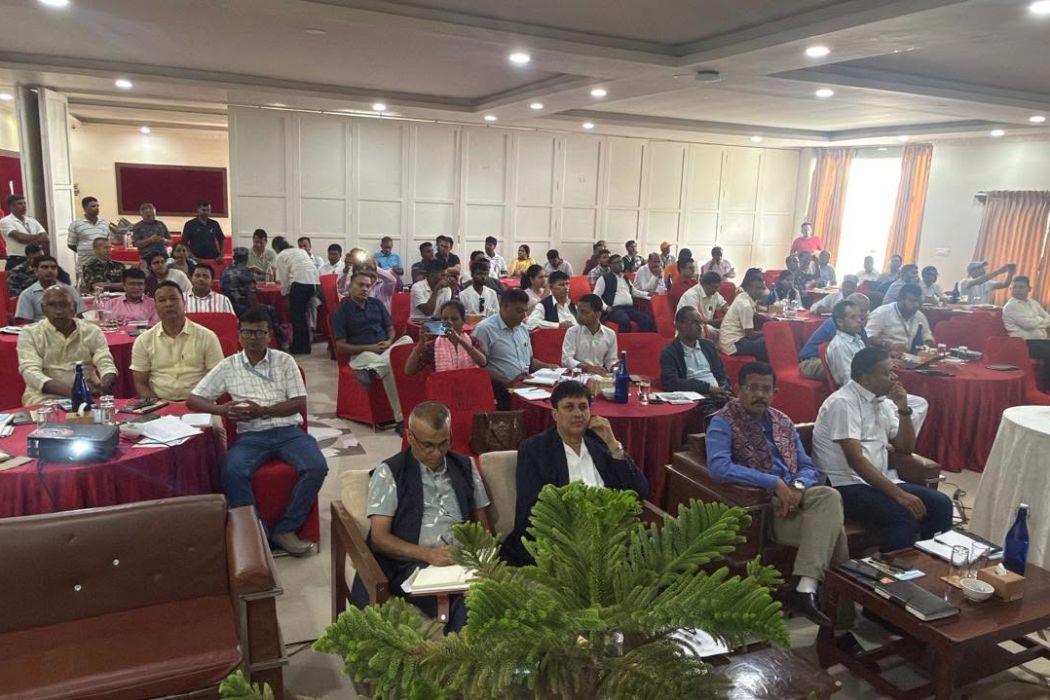
Kathmandu - 29 November 2025 - A four-day training on Gender Equality, Disability, and Social Inclusion (GEDSI) in Disaster Risk Reduction and Management (DRRM) concluded today at Eco Learning Resort, Shankharapur, equipping participants with the knowledge and skills to make disaster preparedness and response more inclusive. The event, organized by ROYM, DPNet Nepal, and UN Women under the Gender Responsive Disaster Preparedness and Response project, brought together 27 participants from women’s organizations, LGBTQIA+ led groups, organizations of persons with disabilities (OPDs), and other civil society actors engaged in DRR.

The training emphasized integrating GEDSI principles into all aspects of disaster management, promoting intersectional analysis, and strengthening practical skills for preparedness, response, recovery, and reconstruction. Reflecting its commitment to diversity, the participant group included 26 women, 3 men, 3 persons with disabilities, and 1 LGBTQIA+ representative.

Over four days, participants engaged in technical presentations, group exercises, case studies, field practicums, and reflection activities. They explored topics such as hazard assessment, protection and empowerment in humanitarian response, inclusive recovery and reconstruction, disaggregated data collection, and rapid gender analysis. “Disasters affect people differently depending on gender, age, disability, and socio-economic status. This training has helped us understand these nuances and apply them in planning and response,” said one participant.

A highlight of the training was a field practicum in Shankharapur Municipality wards, where participants engaged with local authorities and community members. They conducted vulnerability assessments, facilitated focus group discussions, mapped hazards, and analyzed historical disaster trends. The exercise gave participants hands-on experience in incorporating GEDSI considerations into local DRRM planning.

The training produced tangible outcomes, including improved understanding of GEDSI and intersectionality in DRRM, strengthened skills in hazard mapping and community assessment, draft GEDSI-responsive DRRM action plans, and identification of advocacy priorities for CSOs to promote gender-responsive disaster planning. It also strengthened collaboration between CSOs, OPDs, women’s organizations, and local government actors.

This initiative, led by ROYM, DPNet Nepal, and UN Women, represents a significant step toward inclusive disaster preparedness, ensuring that every community member—regardless of gender, age, or ability—has a voice and is considered when disasters strike.

Read More

DRRM Capacity Building Training Integrating GEDSI Lens Held in Nepalgunj
  2025-11-13

Nepalgunj – 13 November 2025 – A four-day capacity-building training on Gender Equality, Disability, and Social Inclusion (GEDSI) in Disaster Risk Reduction (DRR) and Humanitarian Response successfully concluded in Nepalgunj, enhancing the skills of local stakeholders and community-based organizations to respond to disasters in an inclusive manner.

Organized under the project “Gender Responsive Disaster Preparedness and Response” by ROYM-Nepal in partnership with DPNet and UN Women, the training aimed to strengthen Gender Equality, Disability, and Social Inclusion (GEDSI)-responsive DRR mechanisms at the local level.

Held at Hotel Kalptaru, Nepalgunj, the program emphasized integrating GEDSI principles into disaster preparedness and humanitarian response. Participants gained practical skills in hazard mapping, vulnerability assessment, early warning systems, cluster coordination, and inclusive data management.

The training adopted a participatory methodology, combining games, scenario-based exercises, panel discussions, and a field exercise in Ward No. 3. Activities such as the Power Walk allowed participants to experience firsthand how intersecting identities affect disaster vulnerability. Group exercises and field visits also enabled practical planning for inclusive local response mechanisms.

Training highlights included:

  • Understanding GEDSI-responsive DRR and humanitarian frameworks.
  • Learning about national and international DRR policies and protection mechanisms.
  • Exploring inclusive governance, gender-responsive budgeting, and community participation.
  • Developing ward-level action plans incorporating early warning communication and disaster preparedness for vulnerable groups.
  • Building partnerships among local government, CSOs, OPDs, and UN agencies for collaborative action.

Key sessions emphasized the importance of GEDSI-responsive policies, intersectionality in disaster impacts, and inclusive data collection for resilience. Panelists from government agencies, UN Women, Nepal Red Cross, and local CSOs shared insights on policy gaps, budgeting challenges, and collaborative approaches for inclusive disaster management.

Participants highlighted that the training enhanced their understanding of GEDSI integration, exposed them to practical tools for vulnerability assessment, and enabled them to develop preliminary inclusive ward-level action plans. The training concluded with reflections, post-training assessments, and the distribution of certificates.

Read More

DPNet Timeline

  • 2020 Onwards

    • Organized National Conference on Disaster Risk Reduction
    • Conducted CHS review reflection and various policy dialogues in federal and provincial level
  • 2016-2020

    • Conducted interaction with MPs to formulate DM Act
    • Coordinated among Ministries, AINTGDM and stakeholders for the formulation of NDRRP and NDRRSAP
  • 2011-2015

    • Developed guideline for District Disaster Preparedness and Response Plan
    • Took the responsibility as a Secretariat of NPDRR, chaired by Secretary of MoHA
  • 2006-2010

    • Registered as a legal entity
    • Initiated the publication of Nepal Disaster Report
    • Initiated advocacy for the need of strategic planning
  • 2001-2005

    • Initiated to bridge the gap between Government and stakeholders
    • Initiated advocacy for the need of DM Act
  • 1996-2000

    • Established as loose forum
    • Initiated policy dialogues on DM
Subscribe for Newsletter

Please subscribe to our Newsletter to stay connected and updated
Our Members